
A baseline assessment of where Haiti’s electoral process stands, what has changed, and the practical and political factors shaping what comes next. Updated editions will follow at key stages of the process.
Baseline Assessment | August 2026
The bottom line
Haiti now has an electoral process with a legal framework, a calendar and active preparations. The first round of presidential and legislative elections is scheduled for December 13. The next phase will test how far that progress can be translated into practice.
Registration must expand amid displacement and uneven access. Candidate registration will require the CEP to apply politically sensitive rules to actual candidates. Security conditions will determine not only where electoral activity can take place, but whether candidates, personnel, materials and voters can move with sufficient access.
These processes are advancing on a tight calendar. Several operations overlap, and delays in one area could reduce the time available for others.
February 7 adds a political dimension to any delay. The further the electoral process falls behind schedule, the greater the risk that political attention shifts from the election to the future of the transition and what comes next.
Where the process stands
The main elements of the electoral framework are now in place. The CEP published the electoral calendar on July 27. Voter registration began on July 20, candidate registration opened on August 20, and 105 political structures, including 88 parties and 17 groupings, have been approved.
Registration has also expanded into the West, which was initially excluded from the July 20 launch because of security, accessibility and operational constraints.
These milestones show a process that is moving. They do not yet show whether that progress can be sustained across the country and through the more demanding stages ahead.
What the milestones do not yet show
Registrations: From numbers to reach
Registration is expanding, but the national total alone will not show whether the process is reaching the electorate across the country. As registration advances, its geographic distribution will matter as much as the overall number.
Approximately 6.19 million voters appeared on Haiti’s electoral register in 2016. That is a historical benchmark, not a current target: Haiti’s eligible population and demographic conditions have changed considerably since then. It nevertheless gives a sense of the scale at which national voter enrollment has previously operated.
Registration closes on October 13. The pace of enrollment will matter, but so will its distribution.
Displacement has altered where many Haitians live, while insecurity and transport constraints make some communities considerably harder to reach than others. A voter may no longer live near the community where he or she previously participated. A registration center may be officially open while roads, transport costs or local insecurity make access irregular.
A sharp increase in the national total could therefore coexist with important gaps across departments or communes. Figures at the department and commune levels would provide a clearer picture of whether registration is reaching a broadly representative electorate or is concentrated in areas where enrollment is easier to organize.
By October, the more useful question will not simply be how many people have registered. It will be where they have registered, which areas remain underrepresented and whether the CEP still has time to close those gaps.
Security: The challenge of electoral access
The West and Artibonite are particularly consequential. Together, the two departments accounted for roughly 54 percent of registered voters in the previous electoral cycle. Persistent insecurity in parts of both departments therefore has national electoral consequences.
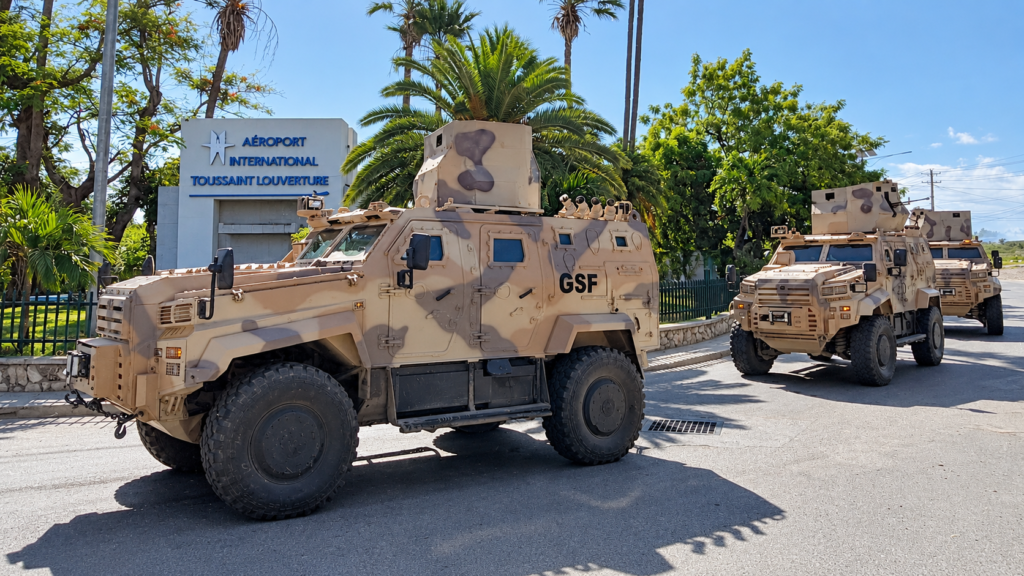
The August 24 attack in Kenscoff is a reminder of how quickly the operating environment can deteriorate. At least 47 people were reported killed and 22 injured, according to figures cited by the United Nations. Kenscoff has faced repeated attacks and sits above routes that matter for movement around the capital and toward southern Haiti.
For electoral authorities, the relevant geography extends beyond the place where violence occurs. Personnel and materials have to move through roads and junctions that may be vulnerable even when the destination itself is not under gang control. Candidates, observers, party representatives and voters depend on many of the same routes.
Access also remains uneven and can shift quickly. A commune may be accessible while key roads leading to it remain vulnerable to gang activity, or movement may depend on temporary security deployments and changing conditions on the ground. This can allow voter registration to proceed without guaranteeing the sustained access needed for campaigning, the movement of electoral personnel and materials, or voting itself.
Gangs can affect an election without preventing it from taking place. Control or influence over neighborhoods can determine which candidates are able to enter, where campaign events can be held and how freely voters participate. The risk becomes more serious if political actors seek arrangements with armed groups to secure access, exclude rivals or influence voters.
Political Buy-in: The test is still ahead
The approval of 105 political structures, including major political actors, is an important sign of engagement. Political organizations have taken the administrative steps required to preserve their ability to compete.
That does not mean disagreements over the electoral process have been resolved. Some political actors are already questioning aspects of the calendar, the CEP or the conditions under which elections would take place, while remaining engaged in the process.
This is not unusual in Haitian politics. Preparing for elections and negotiating over political power can happen at the same time. Parties can preserve the option of competing while challenging CEP decisions, seeking alliances or pressing for changes to the process. They can also reassess their participation as political conditions change.
Candidate registration will make that balance harder to maintain. It will move the process beyond administrative participation and begin to show how the rules of competition are applied and how political actors respond when those rules carry real consequences.
Candidate registration now moves politically sensitive provisions of the Electoral Decree from paper to enforcement. Questions involving eligibility, sanctions, public office, party financing and state resources could become contentious when applied to actual candidates.
The Calendar: February 7 raises the stakes
Voter and candidate registration are advancing at the same time. From October, the CEP will also have to finalize electoral lists, resolve candidate disputes, prepare ballots, recruit and train personnel, move materials and put security arrangements in place ahead of the December 13 first round.
Some of these operations can overlap. Others depend on earlier steps being completed. Delays in registration can compress preparation of electoral lists. Candidate disputes can hold up ballots. Procurement or security problems can slow several operations at once.
The key question is how much delay the sequence can absorb before the December 13 timeline becomes harder to sustain.
The electoral process can continue beyond February 7 even if the calendar holds. The political risk increases if Haiti reaches that date without a credible first round or with major delays unresolved.
February 7 is a political marker for Haiti’s transition, not an electoral deadline. The CEP calendar already extends beyond it: a possible second round is scheduled for February 21, with definitive results to follow. The electoral process can therefore continue beyond February 7 without falling outside the current timetable.
The significance of the date is political. What matters is where the process stands when Haiti gets there.
A credible first round, results that remain within the electoral dispute process, and an active runoff would leave the electoral process on a visible path toward an elected government. Reaching February 7 without a first round, or amid major delays, unresolved disputes or declining political participation, would create a different political situation.
In that case, pressure could shift from completing the election to revisiting the transition itself. Political actors could again contest who should govern, under what arrangement and for how long.
That possibility also shapes incentives before February 7. As delays accumulate, actors who see greater advantage in a new transitional arrangement may have less incentive to compromise within the electoral process. Boycott or demands for a new political agreement could become more attractive if the electoral path weakens.
Haiti Briefing Assessment
Haiti’s electoral process has made tangible progress. The legal framework is in place, the calendar is public, voter registration is underway and political actors have entered the formal process.
The next phase will show how far that progress can be sustained in practice. Registration will need to expand geographically, security planning will have to account for movement and uneven access, and candidate registration will test how politically sensitive eligibility rules are applied.
These pressures are connected. Registration gaps can become political disputes. Insecurity can produce unequal campaign access. Candidate exclusions can weaken political buy-in. Delays in one area can also increase pressure on an already compressed calendar.
December 13 is the first major electoral test. February 7 raises the political stakes of delay. The central question is whether Haiti reaches that point with an electoral process that remains operational, politically viable and still treated by consequential actors as the principal route toward an elected government.
Next inflection point
Haiti Elections: State of Play is a periodic assessment of Haiti’s electoral process. It examines what has moved forward, where difficulties are emerging, and what could shape the next stage.
The assessment looks beyond whether formal steps have been completed. It examines how they are working in practice, including where electoral authorities can operate, how political actors are responding, and whether delays or disputes are beginning to affect the wider process.
The assessment draws on CEP documents and data, Haiti’s electoral framework, public statements, and reporting by Haitian and international media. Where possible, Haiti Briefing checks developments against more than one source.
Formal progress is treated separately from what can be established about implementation. A deadline announced, a registration center opened or a political party registered can show movement. It does not, on its own, establish how widely a measure is being implemented or whether the next stage can proceed as planned.