
- UNGA comes as Haiti’s electoral timetable tightens, with December 13 still set for the first round.
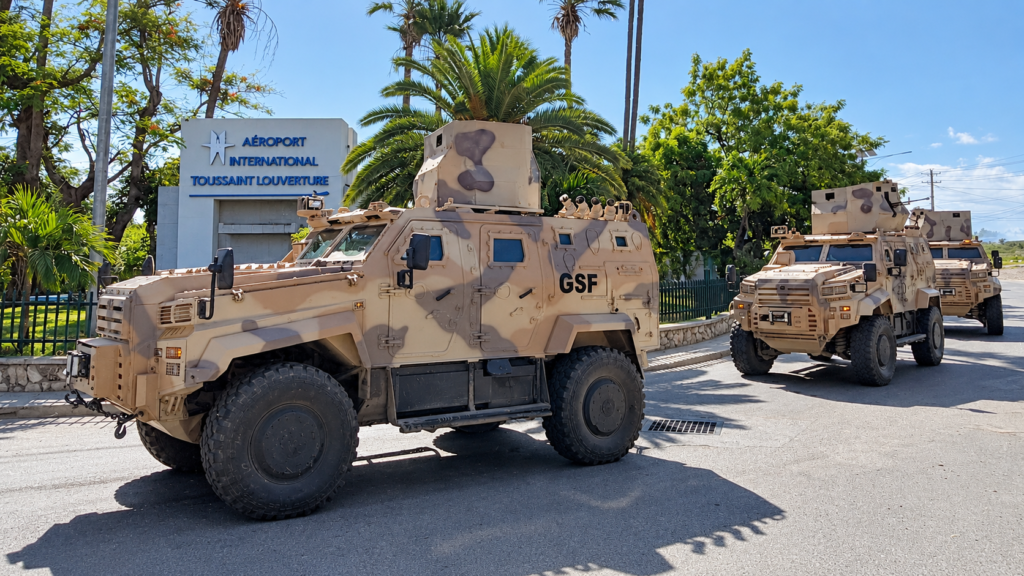
- Security will be a major part of the New York discussion, as the GSF remains short of full deployment and election preparations depend on safer access across the country.
- CARICOM’s recent consultations have widened the political discussion, bringing questions about the transition alongside efforts to keep elections moving.
- At the margins, Haitian civil society is pressing accountability questions, including judicial cooperation around international sanctions and concerns over the Haute Cour de Justice (High Court of Justice) decree.
Background
Haiti heads into the 81st session of the United Nations General Assembly (UNGA) high-level week with December 13 still set for the first round of presidential and legislative elections. Every September, UNGA brings presidents, prime ministers, foreign ministers and diplomats to New York for the General Debate and a crowded week of meetings on its margins. This year’s debate runs from September 22 to 28.
For Haiti, the timing matters. The Provisional Electoral Council (CEP) is moving ahead with preparations for December while major questions remain around security, voter registration and candidate registration. The current authorisation for the Gang Suppression Force (GSF) runs through September 30, with the Security Council expected to consider its reauthorization this month. CARICOM has also just completed consultations that brought concerns over the electoral process and the broader transition into the same political conversation.
Three questions will shape the Haiti discussion in New York.
KEY TERMS
Three former Caribbean prime ministers tasked by CARICOM with facilitating political dialogue among Haitian stakeholders.
Haiti’s constitutional mechanism for hearing cases against certain senior officials for offences committed while in office.
1. Can the security response create enough space for elections?
The GSF is still in an early deployment phase. Its military component stood at 1,083 personnel on July 8, against an authorized ceiling of 5,550. Full operational capacity is expected sometime between October and the end of the year.
As the election approaches, the security response will be asked to do more than confront gangs.
Election security has its own demands. Candidates and voters need to move safely. Registration and polling sites need protection. Electoral staff have to work across the country, and sensitive election materials have to move securely at every stage.
The territorial constraints are already visible. At a Haiti Briefing roundtable in Washington on September 16 with CEP Executive Director Uder Antoine, participants cited roughly two dozen communes as inaccessible, concentrated largely in the West and Artibonite. In some areas, the challenge goes well beyond opening a registration center. Moving staff, equipment and election materials is already difficult.
CARICOM heard similar concerns during its September visit. Haitian stakeholders told the Eminent Persons Group (EPG) that territories outside state control were constraining voter registration. They also raised concerns about countrywide registration, campaigning, freedom of movement and safe access to voting. CARICOM called for pledged personnel and resources to arrive quickly and for closer coordination between international and Haitian security forces.
In New York, the immediate focus will be the GSF’s reauthorization and the delivery of personnel, equipment, financing and logistics needed to improve the operating environment for the electoral process.
Watch for new commitments of personnel, equipment, financing or logistical support to the GSF, and how much urgency governments attach to bringing the force closer to full deployment before December.
After UNGA, the test will be whether access improves, the CEP can move staff and materials more reliably, and difficult-to-reach areas begin to come back into the electoral process.
2. Can the electoral calendar survive the next three months?
December 13 remains the date on the CEP calendar. There is much less room around it than there was when the calendar was published in July.
Voter registration is the most immediate concern. As of September 21, over 630,000 people had registered. At the September 16 Haiti Briefing roundtable, participants discussed a voter roll in the range of 3.5 to 4 million as a reasonable scale for a national election. The CEP has not publicly adopted that range as a threshold, but it shows how much ground remains to be covered. Registration would have to accelerate considerably, including in areas where insecurity, displacement and limited access make enrolment harder.
Candidate registration is pressing on the same calendar. The operation was initially scheduled from August 20 to October 2. On September 2, the CEP extended the process through October 14, moving the review of files, challenges and appeals further into the month.
Political parties are also pressing for changes to the electoral decree. The CEP confirmed on September 16 that discussions were underway with political actors and the government over another modification. The decree was adopted in June and amended in July. Another round of changes would come while candidacies are still being processed and the rest of the electoral calendar is already moving.
CARICOM heard these concerns directly during its September visit. In its post-visit communiqué, the EPG reported concerns over documentation requirements and the slow pace of voter registration. It also noted that some parties had called for changes to electoral procedures and requirements that “might necessitate a deferment” of December 13.
The calendar is getting tighter. Registration still needs to expand, candidate procedures have already been pushed back, and the rules may change again. Final candidate lists still have to be settled before ballots can be prepared, while staffing, logistics and security arrangements remain ahead.
December 13 will inevitably come up in New York. The discussion is no longer simply about support for elections in principle. It is increasingly about the work still outstanding, the time left to complete it, and whether the calendar can still hold.
Watch how firmly Haitian officials, CARICOM, the Organization of American States (OAS), and other partners continue to speak about December 13.
By mid-October, the numbers and the calendar will matter more than the statements. Registration, candidacies and any further change to the decree should provide a much clearer reading of the December timetable.
3. Is a parallel political transition debate beginning to take shape?
In the weeks leading into UNGA, and before CARICOM’s September visit, an OAS-led high-level delegation travelled to Haiti from August 16 to 19. While the mission covered security, governance, elections and other priorities, the OAS’s public follow-up placed particular emphasis on accelerating the security and electoral tracks.
CARICOM came to the discussion from a different position. Through the EPG, it has spent several years facilitating dialogue among Haitian actors. During the September 2–9 visit, the EPG said it was assessing Haiti’s broader “political conjuncture” alongside preparations for the December election. It met political parties, civil society organizations, business groups and state institutions.
In some of those meetings, the transition itself came up. Political actors discussed the political situation, the governance of the transition and possible arrangements if the current path becomes harder to sustain, alongside the conditions for elections.
Most of the concerns CARICOM reported publicly still relate to the electoral process: candidate requirements, voter registration, security and changes to electoral procedures. But the September consultations also left space for a second discussion. One is about how to get to December 13. The other is about what happens to the political arrangement if that timetable weakens.
Watch whether CARICOM’s discussions remain centered on removing obstacles to the December election or whether the future of the transition begins to feature more openly.
The language around December 13 will matter as well. CARICOM and the OAS continue to support the electoral process. How firmly they continue to organize political discussions around that date will help show whether the broader discussion remains tied to the election or develops into a transition debate of its own.
Other Questions Haitian Civil Society is Raising
Security and elections will dominate the Haiti discussion in New York. Alongside those priorities, Haitian civil society groups are pressing accountability issues that may receive less attention.
International sanctions and judicial cooperation. Canada, the United States and the UN Security Council have imposed targeted measures on Haitian individuals and entities. Civil society groups are asking what happens next: how information held by foreign governments can support investigations and prosecutions in Haiti, and how Haitian authorities can make greater use of existing legal channels.
Haute Cour de Justice. Civil society groups challenging the December 2025 decree organising the Haute Cour de Justice argue that parts of the framework could make it harder to hold senior officials accountable.
Haiti Briefing Lens
UNGA comes as Haiti’s electoral calendar moves into a much tighter period. What is announced in New York will matter mainly for what it changes afterward: access for the electoral process, the pace of registration, and the remaining work on candidacies, logistics and security.
December 13 still anchors the process. CARICOM’s September consultations, however, made clear that political actors are also thinking beyond the electoral timeline if it becomes harder to sustain.
The next several weeks will show how far the support mobilised in New York moves the process forward, and how firmly December 13 continues to frame the transition.
This analysis draws on public documents and statements from the CEP, CARICOM, the OAS, the United Nations and other official sources, as well as discussions during a September 2026 Haiti Briefing private roundtable with practitioners and policy experts.
References to the roundtable reflect points raised during the discussion. They should not be read as official CEP figures or as a consensus view of participants.