
Three experts assess what the Gang Suppression Force (GSF) mandate renewal means in practice, what to watch over the next six months, and how much the force could realistically contribute to security around Haiti’s elections.
Background
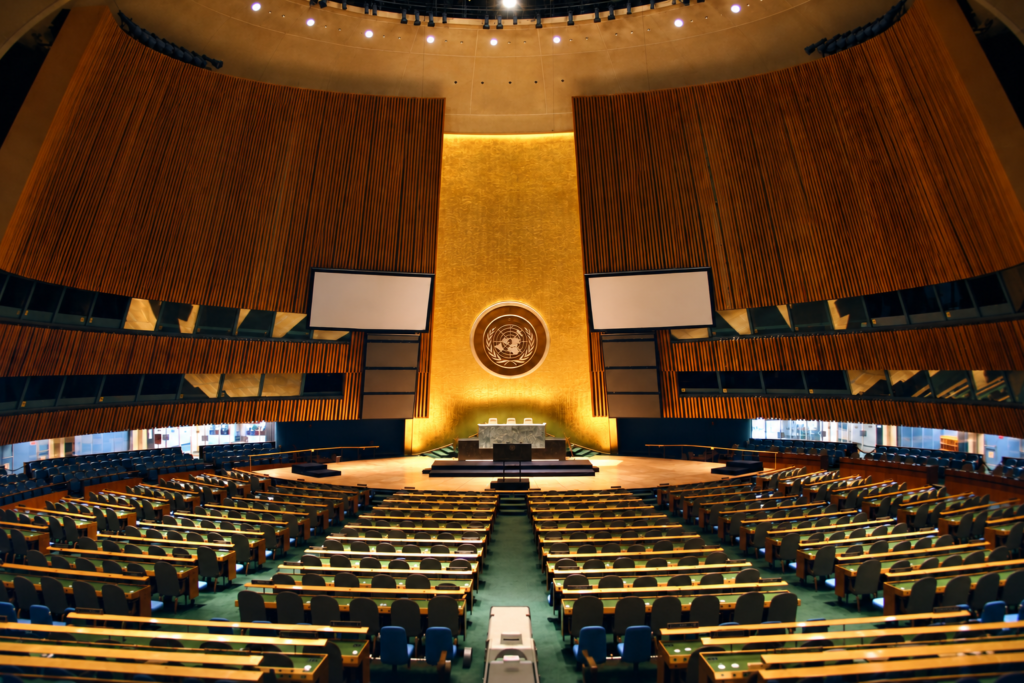
On September 29, the UN Security Council (UNSC) renewed the mandate of the Gang Suppression Force (GSF) for six months, through March 31, 2027. The resolution passed with 12 votes in favor and three abstentions, from China, Pakistan and Russia. The GSF was first authorized in September 2025 to replace the Kenya-led, UN-authorized Multinational Security Support mission (MSS) to Haiti.
The force is still being built out. By late September, nearly 1,600 personnel were deployed, still well below the projected full deployment of 5,500 uniformed personnel. Additional contingents are expected in the coming months as the GSF expands its operational capacity. While the six-month renewal gives the force more time, it also leaves several questions open at the Security Council, including when and how to review its performance, what privileges and immunities should apply to its personnel, and how accountability should work if violations occur.
Haiti Briefing asked three experts what the 2026 GSF mandate renewal means in practice, what they will be watching over the next six months, and how much the force can realistically contribute to security around the electoral process.
SR
Sophie Rutenbar
Senior Expert with the Haiti & Caribbean Observatory at GI-TOC.
View bio
Sophie Rutenbar is a Senior Expert with the Haiti & Caribbean Observatory at the Global Initiative Against Transnational Organized Crime (GI-TOC). She previously served as Mission Planning Officer with the UN Integrated Office in Haiti (BINUH) and worked with the UN Department of Peace Operations, bringing extensive experience on Haiti and UN peace and security operations.
RG
Ricardo Germain
Security and International Cooperation Specialist based in Haiti.
View bio
Ricardo Germain is a security and international cooperation specialist based in Haiti. He previously served as Special Adviser on Defense and Security to Haiti’s Transitional Presidential Council and has held roles with the Ministry of Defense, the Ministry of Planning and External Cooperation, and the Office of Prime Minister Garry Conille. He is the Haiti Country Representative for the Latin American Institute for Peace and Security (ILAPS).
CP
Charles D. Prospère
Haitian Public Policy and Security Expert.
View bio
Charles D. Prospère is a Haitian public policy and security expert whose work focuses on governance, institutional development and security in Haiti. He founded the 1804 Institute and previously coordinated Haiti’s Groupe de Travail sur la Sécurité (GTS), a policy initiative focused on responses to the country’s security crisis. He has also taught at Tuskegee University in the United States and at Université Quisqueya in Haiti.
1. What does the Security Council’s decision to renew the GSF mandate mean in practical terms for Haiti over the next six months?
The six-month extension gives the GSF time for key contingents and capabilities to finish arriving in Haiti, complete training, and deploy to their bases before beginning operations. It also creates an opportunity, once deployment is further along, to assess progress and determine whether the mandate or force composition needs to be adjusted.
In practical terms, the transition is still incomplete. The GSF will spend part of the next six months continuing to build its operational capacity. With the GSF’s full deployment delayed and security conditions still difficult, it is increasingly likely that the elections will also face some delay.
For many Haitians, the six-month renewal may not mean much in immediate terms. The GSF may be seen as another international mission operating on the ground, but not one that can, on its own, significantly improve living conditions or address the broader socioeconomic factors that also contribute to insecurity.
For the government, however, the renewal can be politically useful. The continued presence of the mission can be presented as a sign of ongoing international support.
I also read the six-month term as a sign of some hesitation within the Security Council. More importantly, it puts the GSF in a testing period. With limited resources, the force now has to show that it can produce tangible security results and make the case for continuing its mission beyond these six months.
My reading is that the main purpose of the renewal is to help create enough security space for Haiti to get through the electoral period. It is not a mandate that can resolve the country’s broader insecurity crisis, and I do not think the GSF has the capacity to do that on its own.
We may therefore see more activity from the force over the next few months, particularly in areas linked to the electoral process, but expectations should remain modest.
2. What should we watch to assess whether the GSF is making progress?
One important measure will be how quickly the GSF reaches full operational capability, including the arrival of key assets such as the maritime unit and border management company. Another will be the force’s ability to retake territory from gangs and, just as importantly, the Haitian state’s ability to move into those areas and hold them.
Beyond those operational measures, progress should be judged by whether Haitians feel safer and believe conditions are improving.
The GSF will not produce a miracle in six months, but it could establish a starting point for change. Much will depend on factors beyond the force’s control, including whether pledged resources arrive on time, whether countries in the region can slow the flow of arms and ammunition, and whether Haitian authorities can provide security and basic services in reclaimed areas.
The GSF’s roadmap gives us a number of indicators to follow, most of them operational: patrols carried out, roadblocks dismantled, the resumption of international flights to Port-au-Prince, and other measurable results.
But for me, the more important question is whether Haitians experience a sustained improvement in their daily security. If people can move through areas where the GSF is deployed without constantly fearing extortion or kidnapping, that would be meaningful progress. A thousand patrols mean little if people still cannot move around safely.
I would also look at the force’s ability to arrest and deter. Capturing even one major gang leader alive, forcing others to retreat, or significantly limiting their ability to operate would tell us something about both the GSF’s capacity and its willingness to use it.
The first question is what the GSF should actually be measured against. Its objective is not to eradicate gangs, but to reduce their ability to operate and create minimum security conditions.
That means looking at concrete results. Are strategic roads reopening? Is access to critical infrastructure being restored? Are armed groups losing territory or finding it harder to move weapons and ammunition and carry out criminal activity?
Those indicators also need a clear methodology. Otherwise, it becomes difficult to distinguish real progress from activity that looks impressive on paper but changes little on the ground.
3. How much can the GSF realistically contribute to security for Haiti’s upcoming elections?
The GSF has a supporting role. Under Security Council Resolution 2793, its mandate is to support the HNP, the Haitian armed forces and national institutions in creating security conditions conducive to free and fair elections. That sets clear limits. The GSF will not be guarding polling stations or escorting ballots.
It can, however, help create the broader security conditions needed for credible elections. That could include targeting gangs that seek to prevent people from voting or coerce voters into supporting particular candidates. The GSF can also help secure critical infrastructure needed for the electoral process, especially key national roads used by election workers, electoral materials and voters.
The GSF is not intended to take the lead on electoral security, so we should not necessarily expect it to secure polling centers or electoral materials directly.
Its contribution is more likely to be indirect. Under its mandate, the force is expected to help create the security conditions needed for a return to constitutional order and support Haitian authorities in gradually regaining control of areas held by criminal groups. Some of those areas contain large numbers of voters, which makes the GSF relevant to the elections even if it is not responsible for securing them.
In practice, that could mean securing key roads, urban centers and surrounding areas needed for electoral operations. On election day, if its capacity allows, the GSF could also help contain threats around sensitive areas and prevent attacks from disrupting voting.
The GSF could probably help secure one or two areas in the short term, but I would not expect it to provide security at the scale required for the electoral process as a whole.
A lot will depend on where the force is deployed and how its operational priorities are set. My concern is that those priorities may not always match the areas Haitians see as most urgent. Its contribution could matter in specific places, but I would be cautious about expecting the GSF to fundamentally change the security environment for elections across the country.
Haiti Briefing Lens
The next six months will be critical for the GSF. It will need to show that its presence is improving security in ways people can see and feel. Reopened roads, safer movement, less gang control, and the return of Haitian institutions to areas where security improves will matter more than patrol counts alone.
The elections will make that pressure harder to avoid. The GSF does not carry primary responsibility for electoral security, but in practice the distinction may become less clear. If insecurity blocks access to population centers, key roads, or areas needed for electoral operations, expectations will fall on the force to help create the conditions for the process to move forward. Security around the elections could therefore become one of the clearest measures of the GSF’s performance over the coming months.
The renewal also left several questions unresolved at the Security Council. Members still have to decide when and how to review the force’s performance, what privileges and immunities should apply to its personnel, how accountability should work, and what standards should guide assessments of progress. Those questions will remain on the agenda as the GSF moves through the next six months.
Haiti Briefing invited experts with different perspectives on Haiti’s security environment and international security support to respond to the same three questions. Responses were submitted in writing. One response, at the contributor’s direction, was adapted from a previous public interview. Haiti Briefing made light edits for clarity and length while preserving each contributor’s argument and tone. Responses submitted in French were translated into English.
Expert React brings together several perspectives on a major development affecting Haiti. Contributors respond to the same questions, giving readers a direct view of where their assessments align and where they differ.